- Have any questions?
- +91-98717 17305
- babiesandus12@gmail.com


Pregnant at 45 with own eggs: A Realistic Guide

PCOS After Abortion
March 22, 2024
IVF at 42 with own eggs
May 3, 2024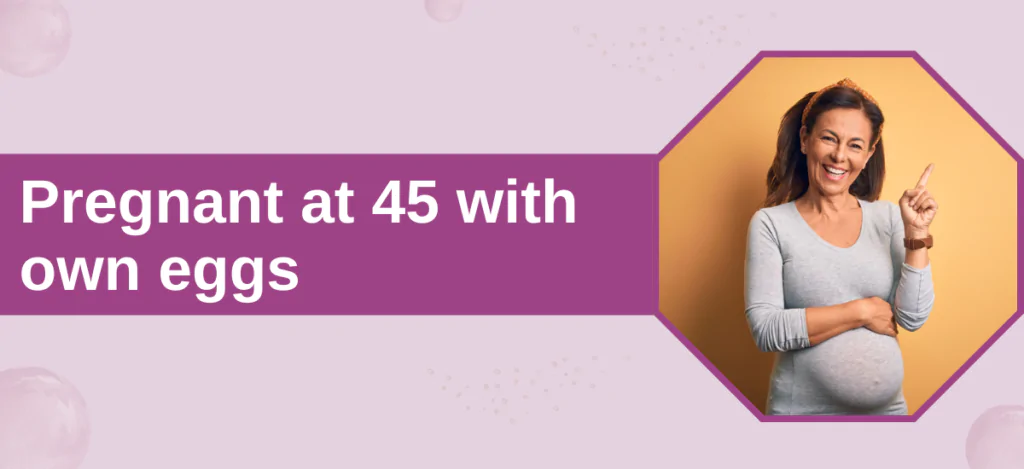
Pregnant at 45 With Own Eggs is a hurdle that is very hard but still possible to overcome. It demands a careful assessment, a proper setting of expectations, and the support of the best physicians. Women in their mid-40s often wonder if they should try to conceive naturally or go for artificial reproductive technologies (ART) as the source of motherhood. It is necessary to undergo infertility treatments and know the biological facts before starting the process.
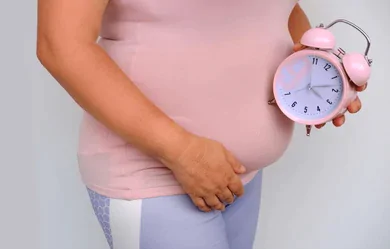
At 45 years old, just around 1%-2% of women get pregnant naturally each menstrual cycle, while the IVF with their own eggs has a success rate of 3%-5% per cycle. These numbers show the natural age-related decrease of the number of eggs and quality. Nevertheless, with the help of modern Reproductive Medicine, and individualized treatment plans, women of advanced age are venturing more and more into the path of getting pregnant.
Dr. Hrishikesh Pai Medical Director and Co-Founder of Babies & Us, IVF centre in Mumbai is an authority in the field of reproductive technology with over 40 years of experience under his belt. It is due to his guidance that the clinic has been able to offer individualized fertility care to thousands of women. The guide discusses the hardships and the victories at 45 years of pregnancy, the fertility treatments available, and the role of medical professionals in the process of attempting pregnancy with one’s own eggs.
Good IVF centers can provide you with comprehensive treatment facilities. Visit your nearest clinic to embrace your parenthood journey.
Possibility and Realities of Pregnancy at 45 With Own Eggs
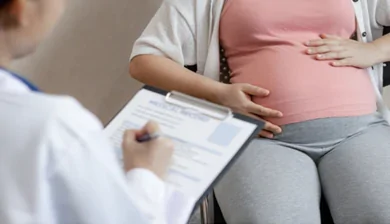
Pregnancy at 45 using one’s own eggs is biologically possible, but success rates are limited. Age-related fertility decline, reduced egg quality, and increased health risks significantly influence outcomes. While assisted reproductive technologies can improve the likelihood of conception, gains remain modest and must be approached with informed expectations.
Chances of Conception at 45
The probability of natural conception at age 45 is approximately 1–2% per menstrual cycle, representing a significant decline compared to earlier reproductive years.
With IVF using one’s own eggs, success rates improve slightly to 3–5% per cycle, though outcomes vary depending on ovarian reserve, embryo quality, and overall health.
Factors affecting success include:
- Reduced number of viable eggs
- Declining egg quality and fertilization potential
- Lower implantation rates
- Increased risk of miscarriage
Beyond age 45, spontaneous conception becomes exceedingly rare, though isolated cases do occur.
Age-Related Fertility Decline and Ovarian Reserve
Ovarian reserve refers to both the quantity and quality of remaining eggs. By age 45, Ovarian reserve is typically significantly diminished.
Egg quality also declines sharply with age. Studies show that 75–90% of eggs in women over 42 exhibit chromosomal abnormalities, leading to reduced implantation rates and higher miscarriage risk.
Hormonal markers often reflect this decline:
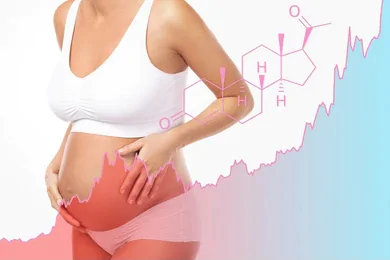
- Elevated FSH levels indicate reduced ovarian responsiveness
- Low AMH levels reflect diminished egg reserve
Fertility specialists assess ovarian reserve through hormone testing and ultrasound evaluation to guide treatment planning and set realistic expectations.
Maternal and Fetal Health Considerations
Pregnancy after 45 is associated with higher medical risks and requires close monitoring.
Maternal risks include:
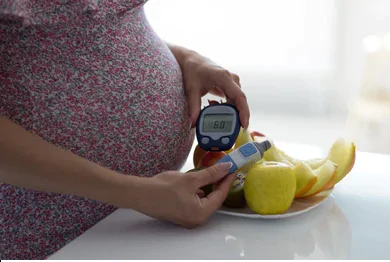
- Gestational diabetes (10–15% incidence)
- Hypertensive disorders, including pre-eclampsia
- Increased likelihood of caesarean delivery
- Placental complications
- Higher rates of preterm birth
- Miscarriage rates of 50–60%
Fetal risks include an increased likelihood of chromosomal abnormalities. At age 45, the risk of Down syndrome is approximately 1 in 30, compared to 1 in 1,500 at age 25. Despite these risks, many women experience successful pregnancies with comprehensive prenatal care and specialist supervision.
Benefits of Using One’s Own Eggs at Advanced Maternal Age
For many women, the genetic connection associated with using their own eggs is deeply meaningful. Advanced maternal age often coincides with emotional maturity, financial stability, and a strong readiness for parenthood.
Additional benefits include:
- Preservation of genetic lineage
- Avoidance of donor-related genetic uncertainties
- Greater psychological comfort for some families
Advances in obstetric care and fertility treatment have significantly improved maternal and fetal outcomes compared to previous decades.
Curious about the steps involved in getting pregnant at 45 with your own eggs? Let’s walk through the procedure together
Advanced Fertility Treatments and Our Expertise
Women attempting conception at 45 require individualized, evidence-based fertility treatment guided by extensive clinical experience. Dr. Hrishikesh Pai and the team at Babies & Us IVF specialize in managing complex age-related fertility challenges.
Role of Assisted Reproductive Technologies at 45
Assisted reproductive technologies offer the most viable pathway to pregnancy at 45 using one’s own eggs.
- IVF remains the most effective option
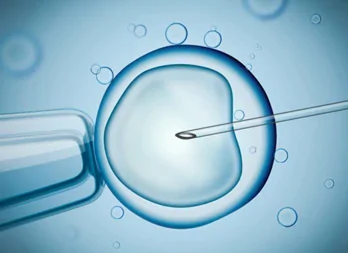
- ICSI enhances fertilization when egg quality is compromised
- Preimplantation Genetic Testing (PGT) screens embryos for chromosomal abnormalities, reducing miscarriage risk and improving outcomes
Less invasive options such as IUI offer limited success at this age. In some cases, donor eggs may be discussed as an alternative when autologous egg success is unlikely.
IVF Process Using Own Eggs
IVF begins with a comprehensive assessment of ovarian reserve, followed by customized ovarian stimulation protocols tailored to age-related ovarian response.
Egg retrieval is performed once follicles mature, and viable eggs are fertilized using IVF or ICSI. Embryos are cultured for 3–5 days before transfer. Single embryo transfer is often recommended to minimize obstetric risks, with surplus embryos cryopreserved when possible.
Personalized Fertility Evaluation
Dr. Pai emphasizes thorough evaluation before treatment initiation, including:
- Hormonal testing (AMH, FSH, estradiol)
- Antral follicle count via ultrasound
- Screening for thyroid disorders, endometriosis, PCOS
- Uterine cavity assessment
- Male partner fertility evaluation
Transparent counseling regarding success rates, miscarriage risk, and alternative options ensures patients can make informed decisions aligned with their goals.
Babies & Us IVF Centre and Clinical Philosophy
Under Dr. Hrishikesh Pai’s leadership, Babies & Us IVF is recognized for innovation, personalized care, and clinical excellence. The top IVF centre in Mumbai pioneered several advanced fertility techniques in India, including assisted laser hatching, oocyte vitrification, and IMSI.
Dr. Pai’s credentials include:
- Former President, FOGSI
- Former FIGO Regional Trustee (Asia Oceania)
- Author of 65 textbook chapters and 42 peer-reviewed publications
The clinic adopts a holistic approach, integrating advanced laboratory techniques, lifestyle counseling, nutritional guidance, and emotional support to optimize outcomes for women pursuing pregnancy later in life.
Conclusion
At Babies & Us, many women have successfully conceived through accurate diagnosis, individualized treatment planning, and expert medical care. Our cumulative experience demonstrates that persistence, precision, and personalized fertility strategies can make a meaningful difference, even in complex cases.
We invite you to explore our patient testimonials and learn how we have helped women fulfill their dream of parenthood.
Schedule a consultation with us today and take the first step towards your dream of starting a family.
FAQs
Q1. Can I get pregnant at 45 with my own eggs?
Yes, it is possible to get pregnant at 45 with your own eggs, but the chances decrease with age due to declining egg quality and quantity.
Q2. What are the success rates of getting pregnant at 45 with my own eggs?
The success rates are relatively low, with natural conception around 1% per menstrual cycle and IVF success around 3-5% per cycle at age 45.
Q3. Should I consider using donor eggs if I’m 45 and want to get pregnant?
Using donor eggs can significantly increase the chances of pregnancy, as egg quality declines with age. Success rates are higher with donor eggs.
Q4. How can I increase my chances of getting pregnant at 45 with my own eggs?
Options include ovulation induction, intrauterine insemination (IUI), in vitro fertilization (IVF), and maintaining a healthy lifestyle. Success rates vary.
References:
https://www.medicinenet.com/chances_of_getting_pregnant_at_45_or_older/article.htm